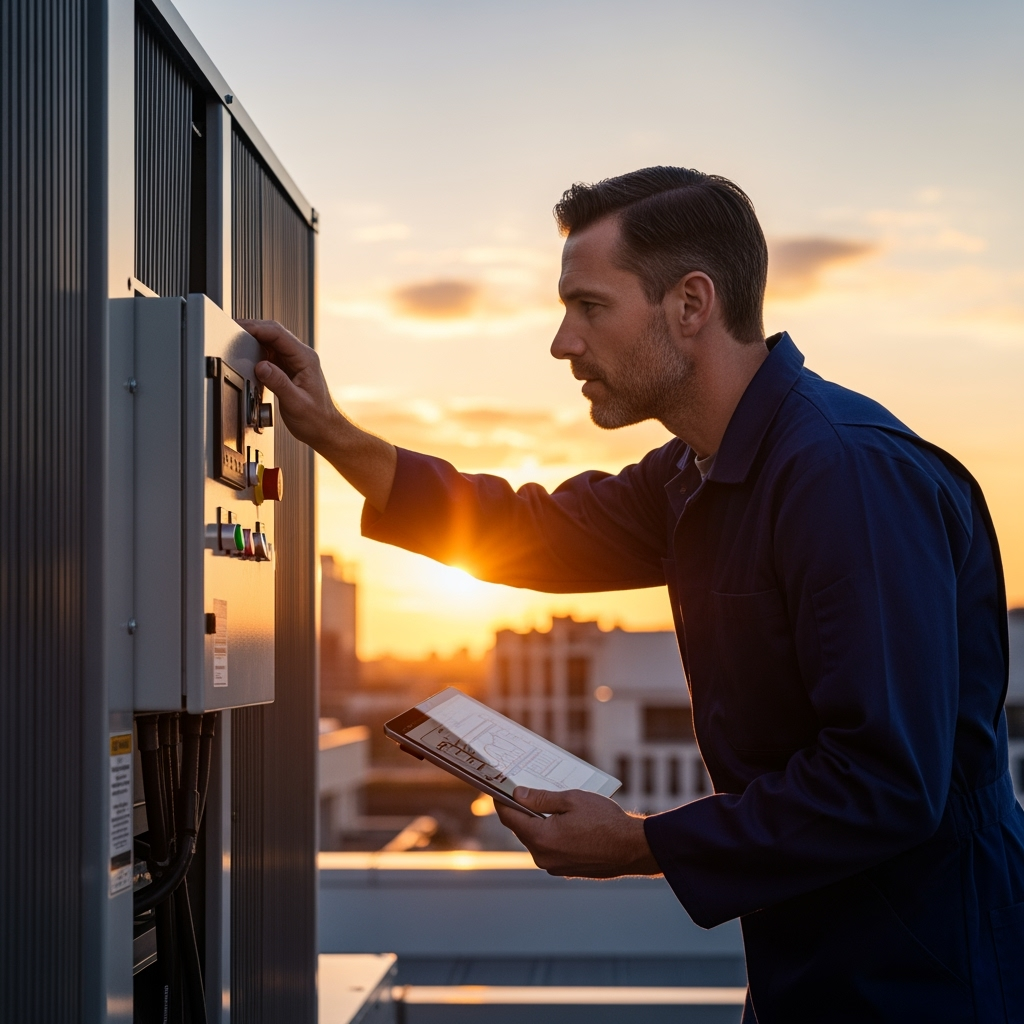
I get that when a rooftop unit fails or an office keeps cycling between hot and cold, the frustration is immediate. If you want to click here to read more about commercial hvac repair, you’ll find the types of services most businesses need and why fast, professional service matters. For context on why commercial systems matter to energy use and public health, the EPA has clear guidance on building emissions and indoor air quality at EPA.
Why commercial HVAC repair deserves your attention
Commercial HVAC systems are not the same as the furnace-and-ac window unit many homeowners know. These systems serve larger spaces, run on tighter schedules, and often have complicated controls. I’ve seen small problems become major operational headaches when an overlooked sensor or clogged condenser reduces performance. Businesses lose productivity, comfort, and sometimes revenue when HVAC isn’t reliable. That’s why quick, knowledgeable repair and sensible preventive care make a measurable difference.
Common commercial HVAC problems I encounter
When I inspect commercial properties, a few issues come up repeatedly. Understanding these helps you prioritize fixes and avoid repeated service calls.
System short-cycling and thermostat conflicts
Short-cycling wears equipment quickly and causes uneven temperatures across a building. Many times the culprit is a faulty thermostat, improper control settings, or a mismatch between zone controls and the system capacity.
Refrigerant leaks and declining cooling capacity
Modern refrigerants and regulations make recharge and repair more sensitive. A leak not only reduces cooling but can also violate environmental rules if not handled correctly. Prompt leak detection and certified repairs limit long-term costs.
Poor airflow and clogged coils
Dirty filters, blocked ducts, and fouled coils reduce efficiency and raise energy bills. They also force compressors and fans to work harder, shortening component life.
Controls and sensor failures
Smart controls are a huge advantage when working, but they add complexity. Sensors that go offline or misread conditions can lead to incorrect schedules and wasted energy. Troubleshooting control systems requires a mix of electrical and HVAC expertise.
Two trends changing commercial HVAC repair right now
There are a couple of trends every building owner should know about. They shape repair choices and long-term planning.
Smart controls and predictive maintenance
IoT-connected sensors and building automation systems let technicians spot anomalies before a breakdown. Predictive maintenance reduces emergency repairs and extends equipment life. If your building still waits until something breaks, you’re missing potential savings and uptime improvements.
Electrification and refrigerant transitions
New refrigerants and electrification-driven retrofits are reshaping service work. Technicians now need certifications for newer refrigerants, and many operators are exploring heat pumps and electrified systems to lower emissions. Repair shops that stay current with training save you time and compliance headaches.
How I diagnose and prioritize repairs
When I arrive at a commercial service call, I follow a practical sequence so owners get clear answers fast.
- Interview building staff to understand the problem history and any recent changes to schedules or equipment.
- Run a visual and mechanical inspection of outdoor and indoor units, looking for obvious wear, leaks, and airflow restrictions.
- Check controls, sensors, and thermostats for correct calibration and communication with the building automation system.
- Measure system performance: temperatures, pressures, and electrical draw to spot failing components.
With those findings I give a prioritized list: safety fixes first, then work that prevents downtime, and finally efficiency upgrades that pay back over time.
Actionable maintenance steps you can start today
You don’t need a full service contract to lower the odds of a major failure. Here are practical steps facility managers or business owners can do between professional visits.
- Replace or clean filters on a consistent schedule; note that high-traffic commercial spaces often need more frequent changes.
- Keep outdoor condenser areas clear of debris and vegetation to maintain airflow and system efficiency.
- Monitor run times and spaces that fluctuate; report unusual noises and compact streaks of hot or cold rather than waiting until performance fails.
- Document each service call and keep a log of part replacements—this helps technicians spot patterns and recommend upgrades.
Choosing the right contractor for commercial HVAC repair
Picking a contractor for commercial work is different from hiring a residential tech. I always recommend evaluating candidates on four things: experience with your equipment type, proper licensing and certifications, response time for emergencies, and a clear pricing structure. Ask for references from similar buildings—schools, retail centers, or industrial facilities—so you know they’ve handled the scale and scheduling that commercial properties require.
Questions to ask before signing a service agreement
These quick questions protect you from surprise costs and poor performance.
- Can you respond to an emergency after normal business hours and what is your average response time?
- Are technicians certified for modern refrigerants and control systems?
- Will repairs come with a parts and labor warranty, and what are the terms?
- Do you provide detailed reports and recommendations after each visit?
When to repair and when to replace
Deciding between repair and replacement depends on age, efficiency, repair cost relative to equipment value, and how critical uptime is for your operation. I typically recommend replacement in these situations: major compressor failures on older units, frequent refrigerant leaks, or ever-increasing repair bills that exceed half the cost of a new system with better efficiency. When downtime risks revenue, replacement often wins because new systems reduce emergency calls and cut energy costs.
How commercial HVAC repair saves money over time
Many building owners think of repair costs as purely an expense. In practice, well-timed repairs and modest upgrades lower energy consumption, reduce emergency service premiums, and extend the life of capital equipment. I’ve sat down with CFOs who were surprised to see payback in under five years after modest investments in controls and preventive maintenance. Plus, improved comfort supports tenant retention and worker productivity—benefits that don’t always show up on the utility bill but matter to the bottom line.
Industry regulations and refrigerant safety
Regulations on refrigerants, leak detection, and emissions reporting are evolving. Certified technicians handle recovery, recycling, and disposal to keep your operation compliant. If your building spans multiple jurisdictions or you manage a portfolio, ask your contractor about record-keeping and compliance support—those details protect you from fines and future forced upgrades.
Real issues I’ve helped clients solve
In one large office complex, a combination of poor zoning and outdated thermostats produced constant tenant complaints. We replaced miscalibrated sensors, rebalanced airflow, and updated control sequences so heating and cooling matched occupancy. Tenant complaints dropped dramatically and energy use fell because the system stopped fighting itself.
Another example: a manufacturing floor experienced repeated compressor failures due to contaminated refrigerant and poor oil circulation. A targeted repair, filtration, and a scheduled oil analysis program fixed the problem and prevented repeat service calls. The owner saved on emergency downtime and avoided a premature full system replacement.
Emerging opportunities for building owners
Two practical opportunities stand out right now. First, controls upgrades can often be retrofitted with minimal disruption but deliver immediate energy and maintenance savings. Second, many utility programs and government incentives support upgrades that reduce energy use or switch to lower-emission systems. Checking available incentives in the city and state can substantially change the payback on upgrades.
How I approach emergency commercial HVAC repair
Emergencies happen. My approach is to stabilize the environment quickly, then diagnose and implement long-term fixes so the same emergency doesn’t return. Stabilization may mean temporary cooling or heating solutions, isolating problematic zones, or short-term control overrides while we schedule proper parts and repairs. Clear communication with building staff during this process reduces panic and avoids scope creep.
Preventive maintenance: the smart investment
Preventive maintenance contracts aren’t just about regular visits; they’re about building institutional knowledge. When one provider handles scheduled maintenance and keeps clear records, technicians can spot trends early. That means fewer emergency calls and better budgeting for eventual replacements. I always encourage clients to see maintenance as risk management and capital planning support, not just a recurring line item.
Final checklist: preparing for a repair visit
When you schedule a repair, these prep steps speed the technician’s work and reduce your downtime.
- Provide access information and clear any safety or security protocols for the service team.
- Share any recent history of system behavior or error codes noted by staff.
- Identify critical zones where uptime is most important so repairs prioritize those areas.
- Arrange for appropriate point-of-contact for sign-off and decision-making during the visit.
Following this checklist helps the technician focus on the root cause instead of chasing symptoms, which saves time and money.
Wrap-up and next steps
If your building needs reliable performance, the right mix of quick repair, clear communication, and smart preventive work will keep tenants comfortable and systems running longer. I’m happy to walk you through an assessment, seasonal tune-up, or emergency plan tailored to the layout and occupancy patterns of your building. Whether you manage offices downtown, a retail strip in a nearby neighborhood, or an industrial park, a pragmatic HVAC strategy reduces surprises and keeps operations humming.
If you’d like professional help or want to schedule a commercial HVAC assessment in the city, contact HHMEC for experienced support and fast service.